News
Find news about Nordic media research and media development together
with news about Nordicom's activities.
Nordicom Review increases its Scopus score
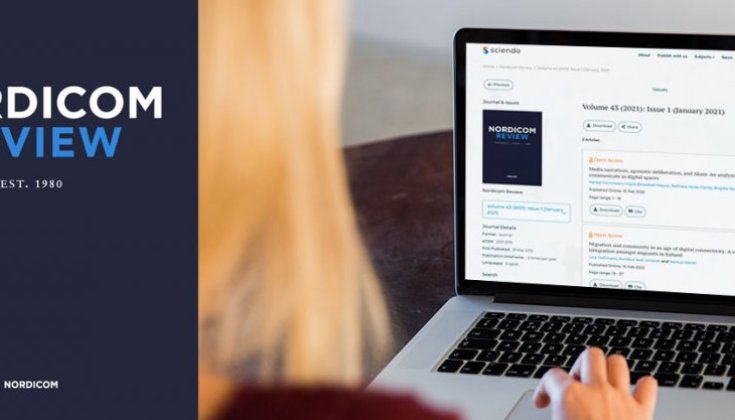
Scopus has now released their cite scores for 2019. The score for the journal Nordicom Review increases substantially, from 0.8 to 1.2. The journal shows constant increase of its cite score value during the past few years.
Nordicom new member of the network MIK Sverige
Nordicom has joined the network MIK Sverige [MIL Sweden], coordinated by the Swedish Media Council. Media and information literacy – MIL, or MIK in Swedish – is a key competence for all ages to be able to find, analyse and evaluate media content as well as communicate and participate in debates and discussions.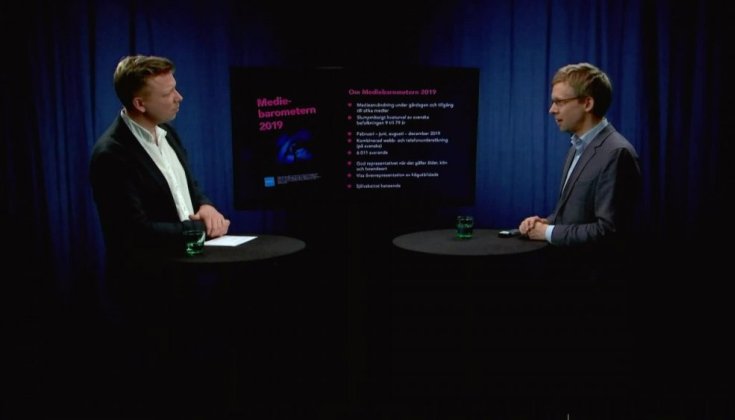
Watch the webinar about the Swedish Media Barometer
On 29 May 2020, Nordicom at the University of Gothenburg presents the results of the Media Barometer 2019, the annual survey investigating the Swedish population’s media use. In addition to the main results, analyses of media use development are presented as well as preliminary results from the Media Barometer 2020, to give insight into media use during the coronavirus pandemic.The digital newspaper dominates and most people watch TV/Online videos – here are the 13 most important results from the Swedish Media Barometer 2019
In 2019, the Swedish population’s daily media usage time was more than six hours. Eight out of ten used social media networking services and two out of three read the daily newspaper on an average day. These are some of the results from the Swedish Media Barometer 2019.Call for papers: Action Research for Media Development: Intersections and boundaries of social change, innovation, and entrepreneurship
Call for papers: Nordicom Review Special Issue. Title: Action Research for Media Development: Intersections and boundaries of social change, innovation, and entrepreneurship. Deadline for abstract submissions:1 November 2020.
Welcome to the webinar about the Media Barometer 2019!
On 29 May 2020, Nordicom at the University of Gothenburg will present the results of the Media Barometer 2019, the annual survey investigating the Swedish population’s media use.