
Various forms of digital news services with a hyperlocal focus have increased in recent years. Media researcher Carl-Gustav Lindén at the University of Helsinki says:
There are many different variants of hyperlocal media, ranging from pure hobby projects to professional services established by former journalists. Some have a clear business model; others want to offer their neighbours information about what is happening in the locality.
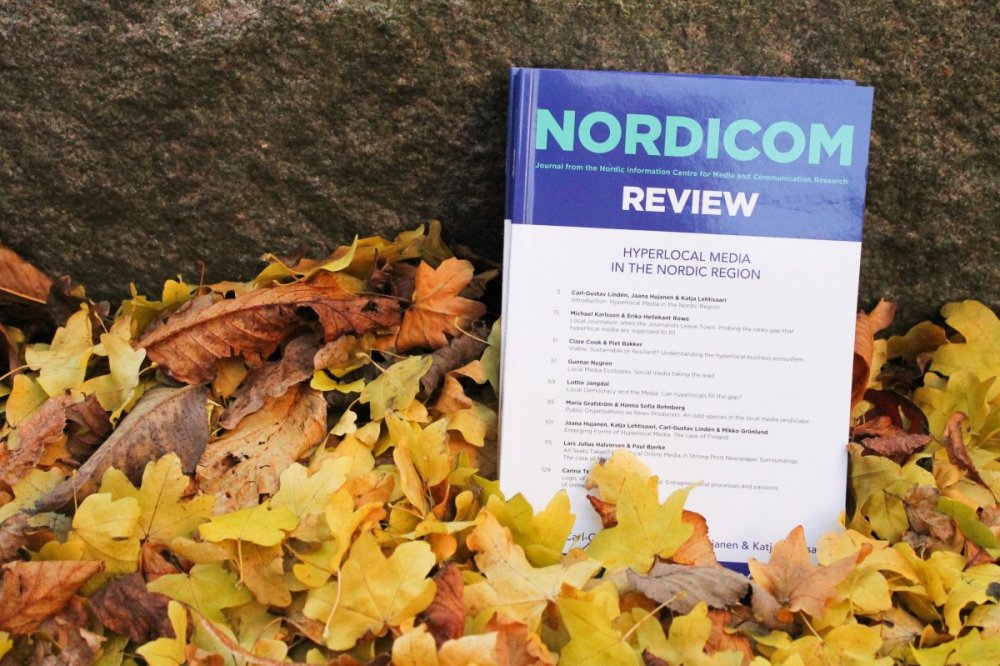
Carl-Gustav Lindén is one of three editors of ‘Hyperlocal Media in the Nordic Region’, a special issue of the scientific journal Nordicom Review which includes the work of fifteen researchers investigating the role of hyperlocal media in the new media landscape.
Some have previously suggested that hyperlocal media could replace discontinued local newspapers and other local news, but a study in the special issue challenges this idea. Lottie Jangdal at the Mid Sweden University found that hyperlocal projects most often exist in places where there are already local newsrooms. Carl-Gustav Lindén comments, ‘Hyperlocal media rarely fill the void of the discontinued local newsrooms’.
Different news with local editors
Smaller hyperlocal actors and remote newsrooms are not able to provide the quality of coverage that a local newsroom can, and when journalism's business model is threatened by declining advertising revenues, many media researchers think this could lead to problems for democracy.
Without local editors, news sources are often replaced with unverified information distributed in groups on Facebook and other social media. The absence of local journalism can have consequences for social cohesion and local democracy, writes Gunnar Nygren from Södertörn University.
Uncertain finances
Today, there are differences in the Nordic countries regarding the possibilities of providing support for hyperlocal projects. Sweden and Norway do provide media support for hyperlocal media that meet basic criteria; in the Swedish case that means having at least 1,500 regular users and at least 50 per cent editorial content.
According to a study by Carina Tenor at Södertörn University, many of the hyperlocal actors have driving forces other than purely economic ones. Carl-Gustav Lindén comments, ‘Many are driven by a great measure of passion and sense of doing something important, and for them, it outweighs the uncertain economic situation’.
There are also some examples of public sector actors, such as municipalities, creating hyperlocal media. ‘They raise questions about one of journalism's most important functions, to scrutinise power’, says Carl-Gustav Lindén.
More information
‘Hyperlocal Media in the Nordic Region’ is a special issue of the scientific journal Nordicom Review. The editors are Carl-Gustav Lindén, Jaana Hujanen and Katja Lehtisaari from the University of Helsinki in Finland.
Digital publishing: https://sciendo.com/issue/NOR/40/s2
The special issue is Open Access. ‘Hyperlocal Media in the Nordic Region’ is recommended not only for researchers but also for policymakers, journalists and the public.
Karin Andén