Category: Sweden

Save the date 16/5: Seminar about the Swedish Media Barometer 2022
On 16 May 2023, Nordicom presents the results from the 2022 edition of the Swedish Media Barometer [Mediebarometern] at a seminar (in Swedish) at the University of Gothenburg. The Media Barometer is an annual survey focusing on how the Swedish population uses media on an average day.
Increased digitalisation and ownership concentration in the Swedish media landscape
A growing share of the Swedish population is turning away from traditional media, reduced advertisement revenues could affect citizens’ access to local news, and the ownership of the newspaper market has been concentrated to a few regional newspaper monopolies. The report MedieSverige 2023 [Media Sweden 2023] gives the reader an up-to-date and broad overview of today's Swedish media landscape.
Book-reading habits in a changing media landscape
A new Nordicom report investigates how digitalisation has affected the Swedish population’s book-reading habits and what they look like in different groups of the population. The report also looks into how book-reading habits were affected by the Covid-19 pandemic, and the status of the book compared to other types of media.
Press subsidies recurring subject in Swedish official reports
Press subsidies, public service, and advertisements are subjects frequently recurring in the Swedish government’s official reports on the media, according to Nordicom’s compilation of official reports. The compilation is updated once a year and includes reports from 1924 onwards.
Increased revenues for daily newspapers
Daily newspapers in Sweden experienced increased revenues and improved profitability during 2021, according to the report Medieekonomi 2022 [Media Economy 2022], produced by Nordicom on behalf of the Swedish Press and Broadcasting Authority. The economically strong year can be explained by increased advertisement revenues, steady reader revenues, and reduced costs.
New research overview examines the significance of public broadcasting
A new research overview, published by Nordicom, presents what empirical research says about central issues regarding public broadcasting in Sweden. The overview aims to make research on public broadcasting more accessible and contribute to a factual and objective debate on the subject.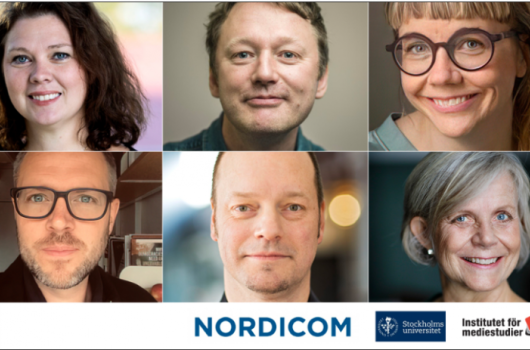
Seminar: What do we really know about public broadcasting?
Welcome to a seminar (in Swedish) about public broadcasting and its role in a digital world, the public’s trust in it, and the competition with other media corporations.
The Swedish Media Barometer 2021: Read the report and watch the seminar
The Swedish population consumed media like never before during the first year of the Covid-19 pandemic. The Swedish Media Barometer 2021 shows that the increased level remained steady during 2021. Find the report and watch the seminar about the Swedish Media Barometer 2021 (in Swedish) here.